Oura & Ultrahuman long term reviews
This is a long term review of my experience with the Oura and Ultrahuman smart rings. I will update this post with my final thoughts in six months about the Oura ring.
Why I Changed My Mind About Smart Ring Subscriptions: Ultrahuman Long-Term Review
Everything started back in the summer of 2024 when I bought my first Ultrahuman Ring.
At the time, my buying decision was driven by one main factor: I did not want to pay for a subscription. I strongly believed that needing a monthly service for a hardware device was unnecessary. I thought a one-time purchase was the only way to go.
However, after using smart rings through 2024, 2025, and now into 2026, my belief has completely flipped. I no longer think a "subscription-free" model is a positive for this specific type of hardware.
Here is why.
The Ultrahuman Experience (2024–2025)
I started with the Ultrahuman Ring in the summer of 2024. Initially, it was great. It had no subscription fees, tracked all the necessary health metrics, and the user experience (UX) was decent. It helped me understand my sleep patterns much better.
The issue wasn't the software; it was the longevity of the hardware.
The First Failure (6 Months In) After just six months, my first ring died. The battery didn't just stop holding a charge; it swelled up and cracked the ring’s housing. This is a pretty serious safety concern for a fully enclosed wearable containing a Lithium-Ion battery worn on our fingers, yikes.
Since it was within the first year, I was able to get a warranty replacement. I know what you're thinking, you got a second ring after the first one swelled up?! yes, I did lol
The Second Failure (8 Months Later) The replacement ring lasted only eight months. During this time, Ultrahuman actually sent me a new charger design, suggesting my ring was getting too warm while charging. Unfortunately, the new charger didn't solve the problem. The second ring still died in less than a year. This time the ring did not cracked the housing or swell up, but the battery did die.
When I contacted support regarding this second failure, the warranty situation got complicated. They told me that because the original purchase date was over a year ago, the warranty had expired. While this makes sense on paper, two failures in less than a year old device is not good.
Excerpt from my support chat:
Ultrahuman Team: After reviewing your case, it appears that your ring falls outside our 1-year warranty policy, as it was first activated on Jun 25, 2024. I completely understand how disappointing this must be for you. I truly wish we could make an exception. However, due to the new ITC ruling, we’re unable to send any rings in the US now, as we're bound by US law.
I genuinely appreciate your understanding in this matter.
 Ultrahuman Support Chat
The Realization: Why You Might Want a Subscription
This experience taught me a hard lesson: Smart rings are fragile and disposable.
In my experience with Ultrahuman, the batteries in these tiny devices deplete quickly and often within 6 to 8 months. That is a very short lifespan for a $300+ device.
- Without a subscription: You pay ~$400 upfront. If the battery dies after the warranty expires (usually 1 year), you are left with a piece of junk and have to buy a whole new ring.
- With a subscription (like Oura and now Ultrahuman): You pay a monthly fee, but this often acts as insurance. If the battery degrades or the ring fails, the subscription model usually incentivizes the company to provide a path to a working device so you keep paying.
I realized that paying $400 for a device that becomes disposable trash in just over a year is a terrible value proposition.
The Switch to Oura (2026)
Because of the durability issues and the lack of long-term support from Ultrahuman, I decided to switch to the Oura Ring for 2026.
I have had the Oura for a little over a month. So far, the experience feels more mature. The User Interface (UI) and User Experience (UX) seem slightly better polished than Ultrahuman's.
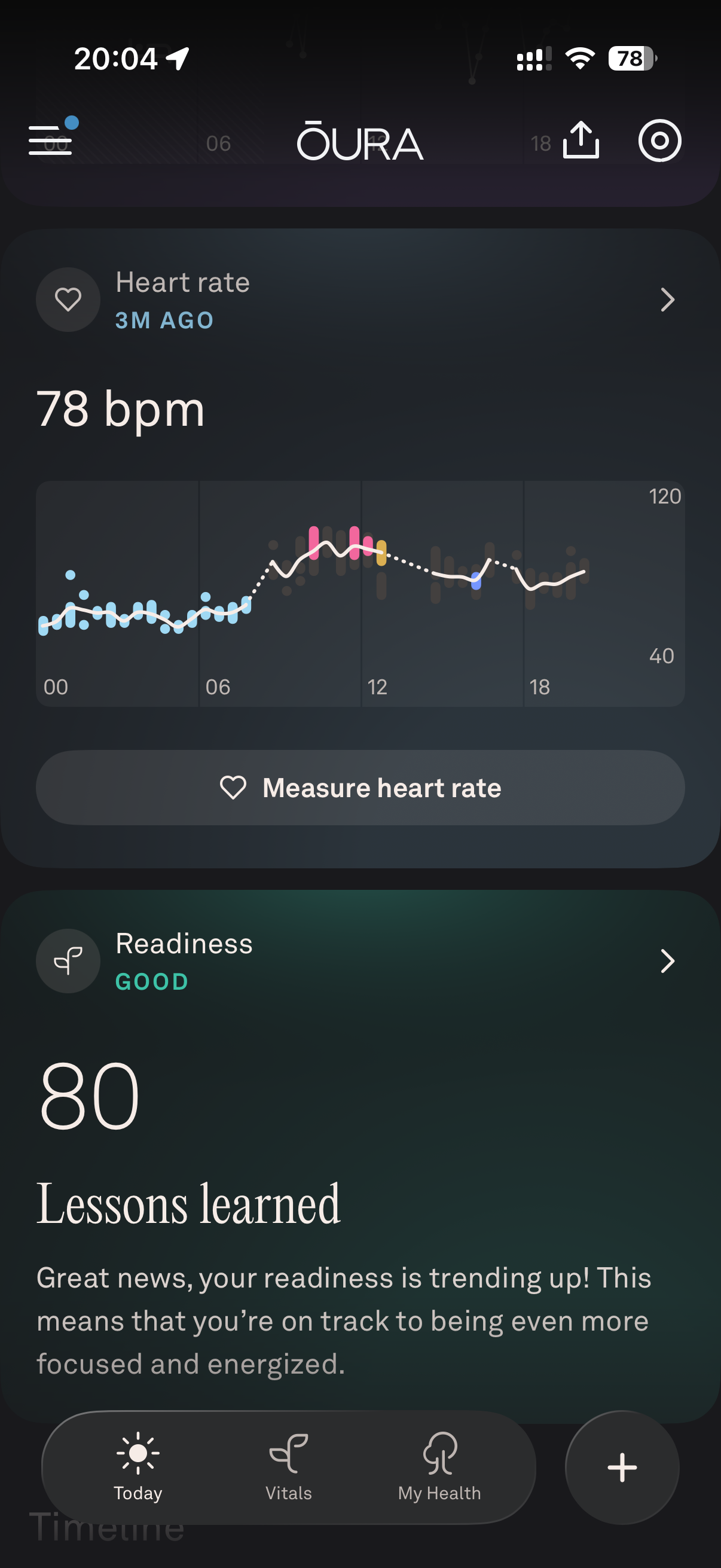 Oura Dashboard
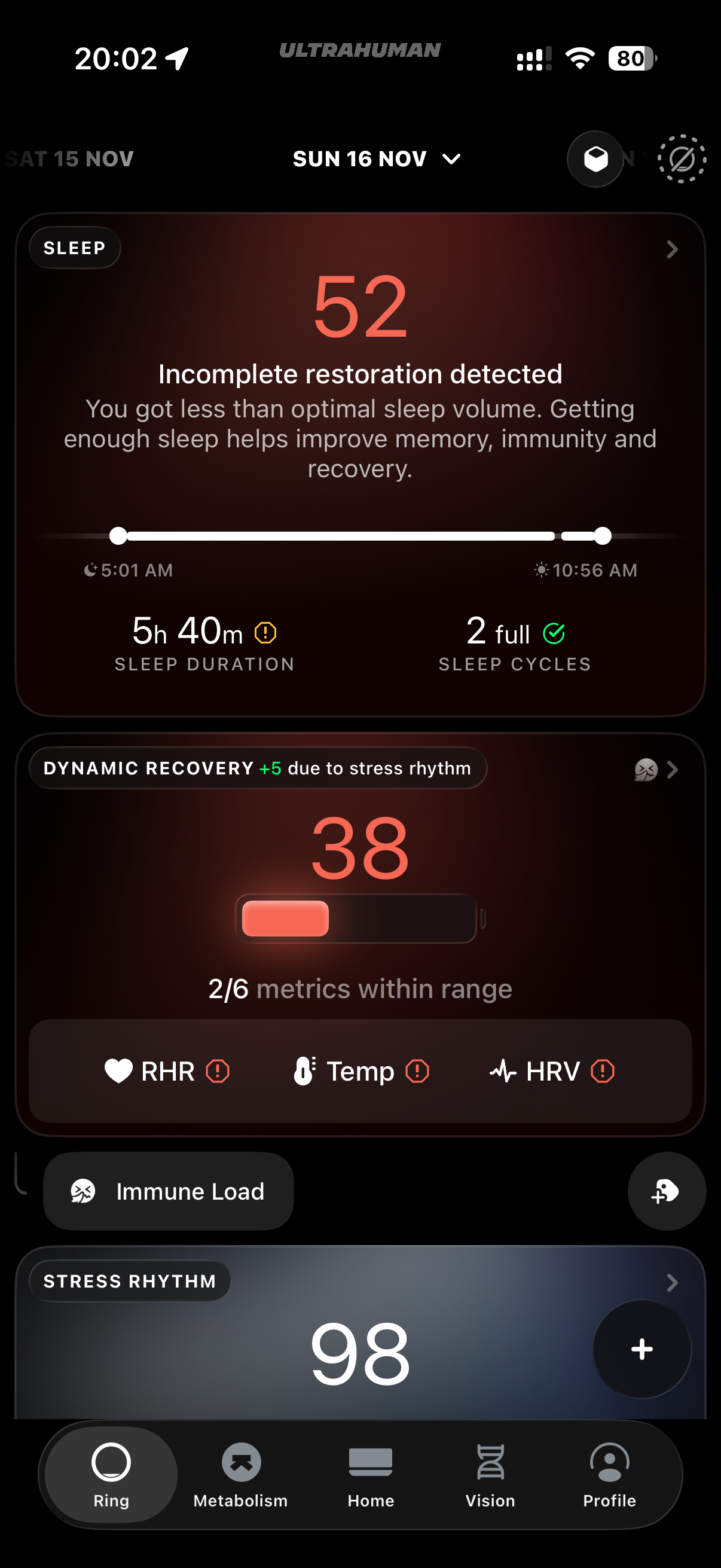 Ultrahuman Dashboard
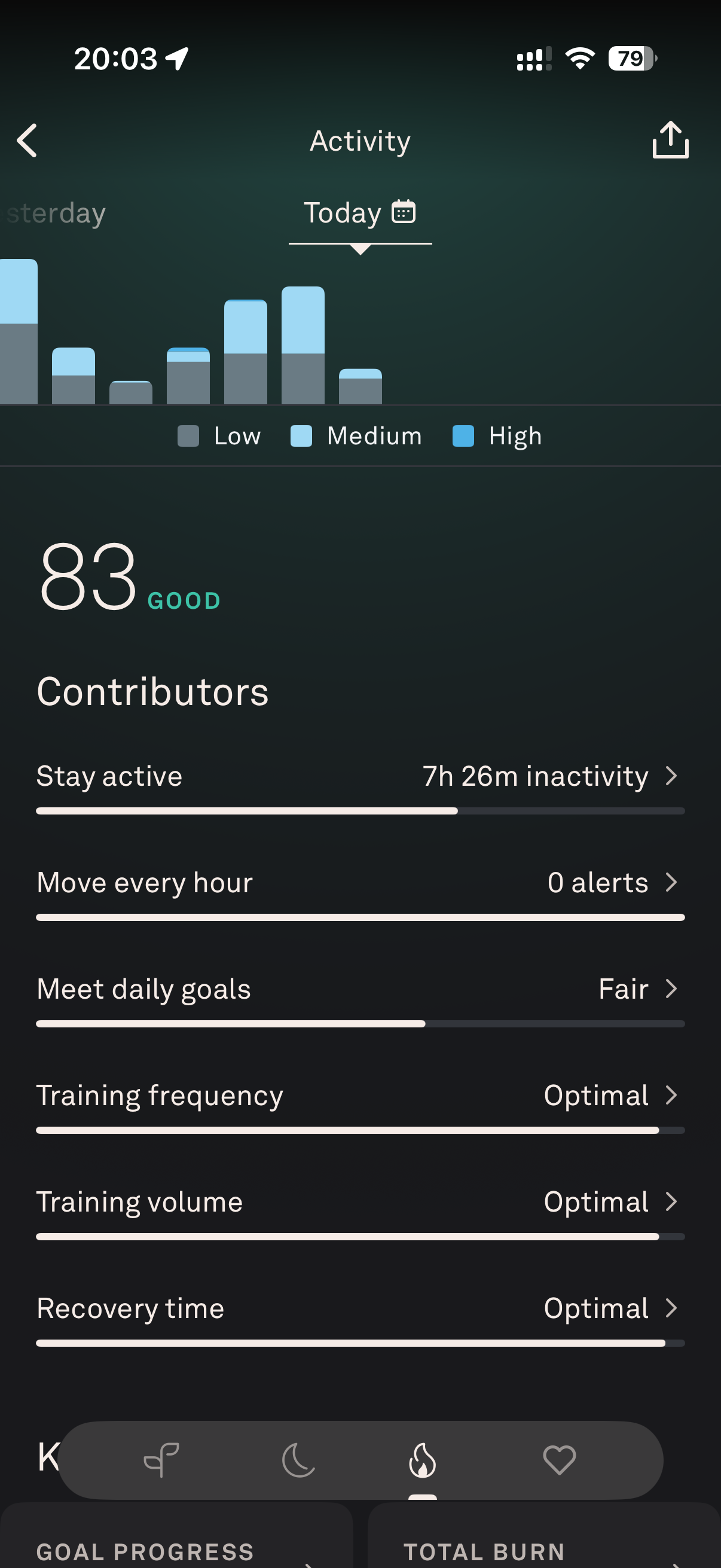 Oura Metrics
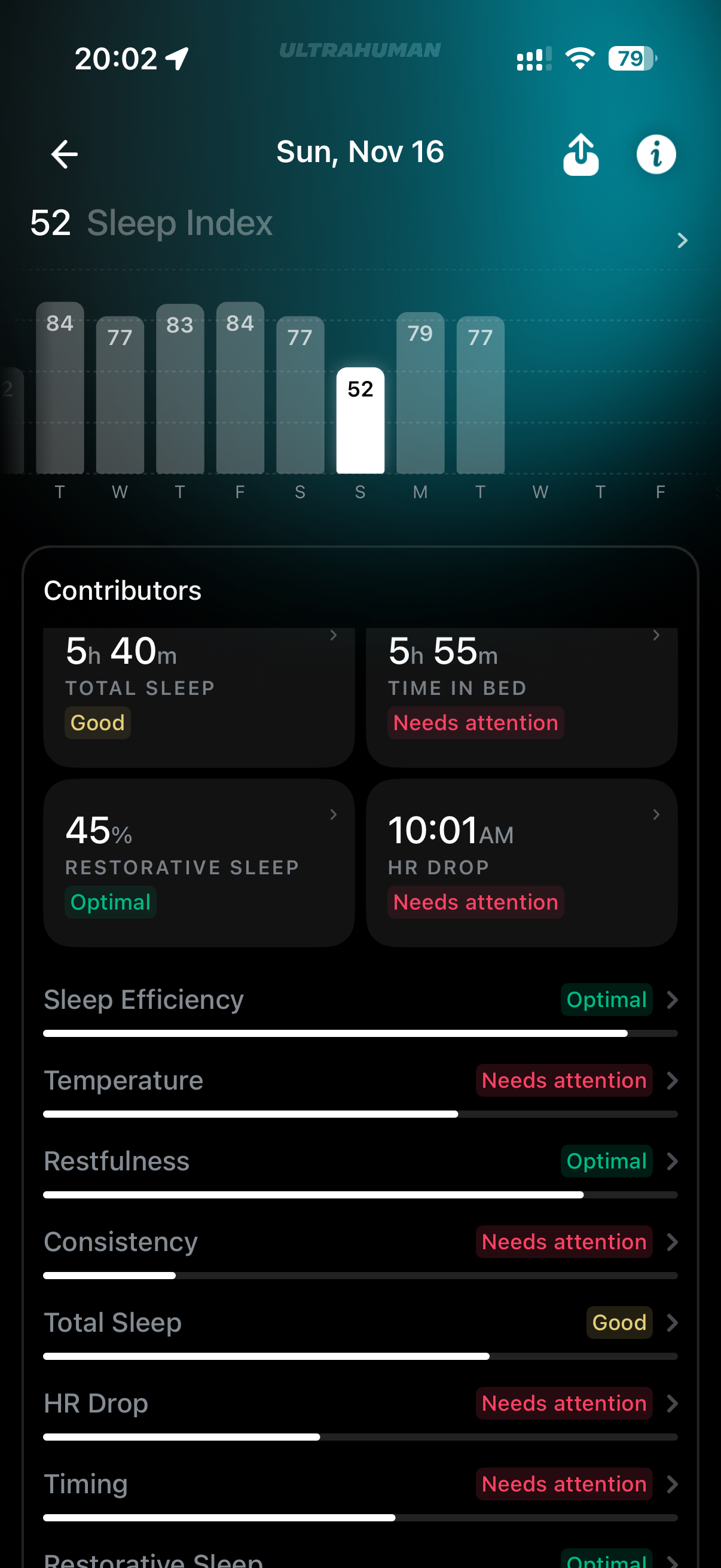 Ultrahuman Metrics
However, I am not ready to write a full review yet. If my experience with Ultrahuman taught me anything, it is that you need at least six months to a year to truly judge a smart ring. You need to see if the hardware survives daily use.
Final Thoughts
For now, the Oura is working well. But my advice to anyone looking at smart rings is to look past the "no subscription" marketing. We need to stop buying disposable tech. If a device costs hundreds of dollars, it shouldn't die in eight months.
We will see if the Oura fares any better.
In six months from now I will update this post with my long-term review of the Oura ring.